Ice Dams and Lake-Effect Snow: Why Cleveland Attics Need a Different Approach
Ask someone in Chardon how much snow they got last winter and the number will sound implausible to someone twenty miles away in downtown Cleveland. That's not exaggeration — it's lake-effect snow banding, a real and well-documented meteorological pattern specific to the Great Lakes, and it means two homes in the same metro area can face genuinely different snow loads, and genuinely different ice dam risk, depending on which side of the lake-effect band they sit on. Understanding that gradient is the first step to understanding why ice dams form here, and why the fix isn't the same generic 'add more insulation' advice you'd get for a house in Ohio's flatter, drier interior.
Cleveland City vs. the Lake-Effect Snowbelt: A Real Gradient, Not a Generalization
Lake-effect snow forms when cold air moves across the relatively warmer waters of Lake Erie, picks up moisture, and dumps it as snow once that air hits land and rises. The exact location of the heaviest snowfall depends on wind direction, and in Northeast Ohio the prevailing westerly and northwesterly winds off the lake concentrate the heaviest bands over Lake, Geauga, Ashtabula, and eastern Cuyahoga counties — not evenly across the whole region. Cleveland proper, closer to the western edge of that banding pattern, typically sees somewhere in the range of 64 to 70 inches of snow a year at Cleveland Hopkins Airport. Head about twenty miles east to the Chardon area in Geauga County, and that number routinely exceeds 120 inches a year — nearly double what falls in the city itself.
That's the genuine, defensible Cleveland-specific story, and it's a different story from the generic 'Ohio winters are cold' framing you'll find in most regional insulation content. It's not just that Northeast Ohio gets snow — it's that the amount of snow sitting on any given roof in this metro area can vary by a factor of two depending on exactly where that roof sits relative to Lake Erie's snowbelt bands. A home in Euclid or eastern Cuyahoga County, closer to the lake-effect gradient than the city core, faces meaningfully more snow-load exposure than a comparable home further west or south.
- Cleveland Hopkins Airport (city): roughly 64-70 inches of snow per year
- Geauga County / Chardon area (snowbelt): 120+ inches per year — nearly double the city total
- Snowbelt counties affected by the heaviest lake-effect bands: Lake, Geauga, Ashtabula, and eastern Cuyahoga
- The gradient runs primarily west-to-east, driven by prevailing wind direction off Lake Erie
Why More Snow on the Roof Doesn't Automatically Mean More Ice Dams — But It Does Raise the Stakes
Here's the part that surprises a lot of homeowners: ice dams aren't caused by snow. They're caused by uneven roof-deck temperature underneath the snow. A roof buried in six inches of snow and a roof buried in eighteen inches of snow can both grow an identical ice dam if the attic underneath both roofs is leaking the same amount of heat — the snow itself is mostly just the raw material the melt-refreeze cycle works with. What changes as snow load increases is the stakes: more snow sitting on the roof for longer stretches means more total meltwater cycling through the same weak points in the attic's air-sealing, and a bigger dam has more water pressure working its way back up under the shingles when it does form.
That's exactly why Cleveland's lake-effect gradient matters for insulation strategy even though the underlying mechanism is identical everywhere in the metro: a home in the eastern snowbelt with a leaky attic is running the melt-refreeze cycle against a much larger snow reservoir for a much longer season, while a home in the city with the same leaky attic is running a smaller-scale version of the same problem. Both need the same fix — a properly air-sealed attic — but the snowbelt home has less margin for error and more to lose if the attic isn't sealed correctly.
The Actual Mechanism: How an Ice Dam Forms
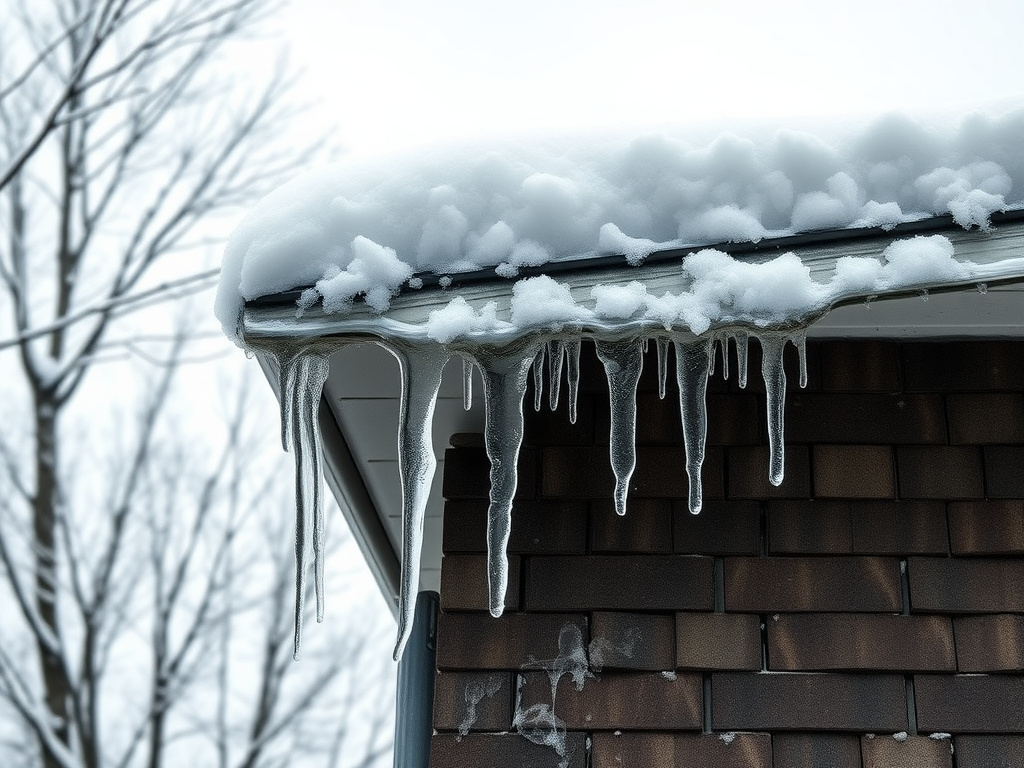
Every ice dam follows the same three-step cycle, regardless of how much snow started the process. It begins underneath the roof, not on top of it. Heat from the living space below rises into the attic — through can lights, attic hatches, top plates, plumbing stacks, and any gap in the ceiling's air barrier. That warm air raises the temperature of the underside of the roof deck well above freezing, even when outside air is well below it. Snow sitting on that warmed section of roof melts from underneath, runs down under the snowpack toward the eave, and hits the overhang — the part of the roof that sits past the exterior wall, with no warm attic below it to keep it above freezing. There, the meltwater refreezes. Do that every day of a snowy Cleveland stretch and the ice keeps building layer by layer until it forms a dam thick enough to back water up under the shingles and into the wall or ceiling below.
- Step 1 — Heat escapes from the living space into the attic through air leaks and under-insulated ceiling areas.
- Step 2 — That heat warms the roof deck from below, melting the bottom layer of snow even in freezing outside temperatures.
- Step 3 — Meltwater runs down to the cold, unheated eave overhang and refreezes, building an ice dam that can force water back under the roofing.
The Fix That Actually Works: Sealing the Attic at the Source
The only way to reliably stop an ice dam is to stop the attic from leaking heat into the roof deck in the first place — and that means air-sealing, not just adding more loose material on the attic floor. Fiberglass batts and blown cellulose can add R-value, but they don't stop air movement; warm, moist household air still finds its way around and through them, still reaches the underside of the roof deck, and the melt-refreeze cycle keeps running. Closed-cell spray foam applied directly to the underside of the roof deck does two things fiberglass and cellulose cannot: it insulates at roughly R-6 to R-7 per inch, and it forms a continuous air barrier in the same application. Open-cell foam is sometimes used in the same conditioned-attic assembly for interior partitions or where a vapor-permeable layer is preferred. Either way, the goal is the same — bring the attic itself into the home's thermal and air boundary so the roof deck stays close to outdoor temperature across its full surface, not just at the eaves.
In a snowbelt home east of the city, that same fix carries more weight: with a much larger snow reservoir sitting on the roof for a longer stretch of winter, a properly sealed attic is doing more total work every single day of the season. In the city, where snow load is meaningfully lighter, the same fix still matters — Cleveland's roughly 64-70 inches a year is still real winter weather, and any leaky attic will still run the melt-refreeze cycle on whatever snow is available. The difference is one of degree, not of mechanism.
Why Heat Cables and Roof Raking Don't Fix the Real Problem
Heat cables (the zig-zag electric cables installed along eaves and in gutters) and manual roof raking after a storm are the two most common responses to ice dams, and they're both band-aids. Heat cables melt a channel through existing ice so water has somewhere to drain, but they run on electricity all winter, they do nothing about the attic heat loss creating the ice in the first place, and they need to be reinstalled or repaired most seasons. Roof raking pulls snow off the lower few feet of roof so there's less material to melt and refreeze, but it requires someone getting on a ladder after every significant snowfall, it only addresses the eave — not the underlying heat loss — and it carries real risk of falling, ladder damage, or gouging shingles with the rake.
- Heat cables treat the ice, not the heat loss — and add an ongoing electric cost.
- Roof raking is manual, seasonal labor with fall-risk and shingle-damage risk, repeated all winter.
- Neither approach touches the attic air leaks or R-value driving the melt-refreeze cycle.
- Both need to be repeated indefinitely, while air-sealed spray foam is a one-time attic upgrade.
What This Looks Like in a Cleveland Attic
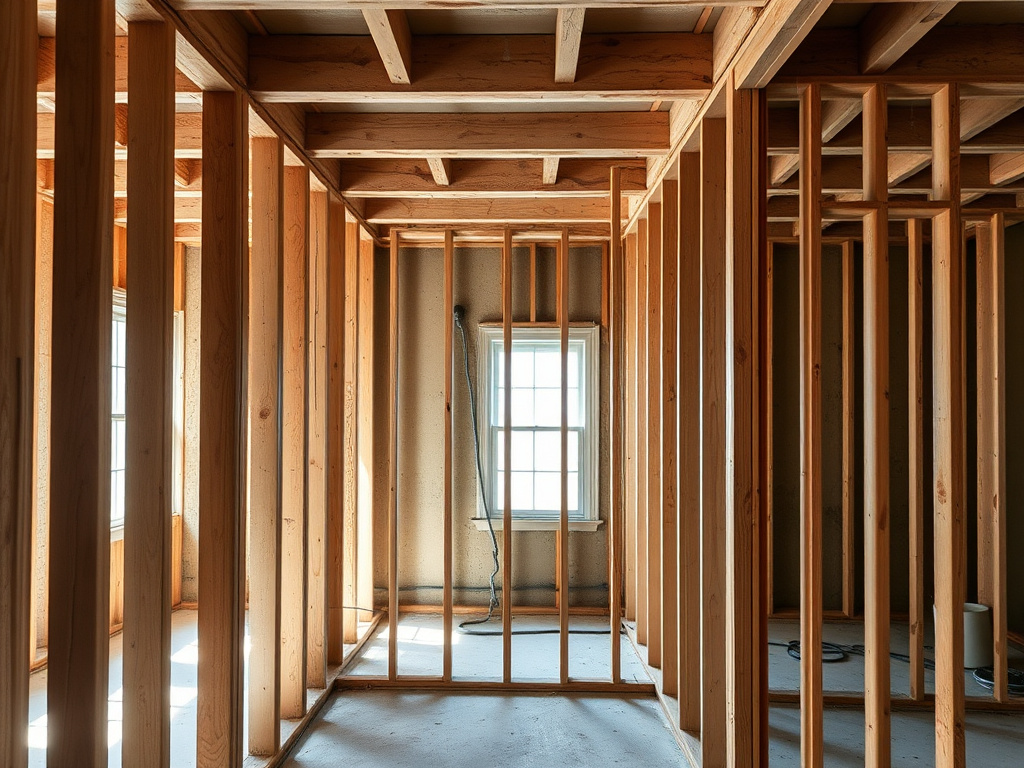
A proper ice-dam-focused attic retrofit starts with an assessment of how the current attic is built and ventilated — vented attics and conditioned (unvented) attics are handled differently, and mixing approaches without a plan can trap moisture instead of solving anything. In many Cleveland retrofits, the target is a fully conditioned attic: spray foam applied to the roof deck and gable ends brings the attic inside the building's thermal envelope, closing off the vents that would otherwise pull outside cold air across an insulated attic floor. In other cases, sealing and foaming the attic floor plane along with dedicated air-sealing at penetrations — can lights, hatches, plumbing and duct chases — gets the job done while keeping a traditional vented attic. Either way, Energy Star's Zone 5A guidance points toward R-49 to R-60 depending on existing insulation depth, and typical attic spray foam projects here run in the $2,500 to $7,500 range depending on attic size and target R-value, with a free on-site assessment being the only way to get a firm number for a specific roof.
This is also worth flagging for homeowners in the older parts of Cleveland's housing stock — more than one in five homes in the city was built before 1940 — where original attic framing, settled or missing insulation, and previous roofing work can all complicate the assessment. Those homes benefit just as much from a properly sealed attic as newer construction; they just need a more careful look at existing conditions before the work starts.
What Ice Dams Actually Damage — Beyond the Icicles
The visible ice hanging off an eave is really just the symptom you can see. The more expensive part of an ice dam happens where you can't see it: once the dam grows thick enough, meltwater backs up behind it and has nowhere left to go but up and under the shingle layer, which was only ever designed to shed water running downhill, not sit in standing contact with it. That trapped water can work through the roofing underlayment and into the roof deck itself, then track along framing members until it finds a path into the attic insulation, the ceiling drywall below, or an exterior wall cavity. By the time a homeowner notices a water stain spreading across a bedroom ceiling, the moisture has usually been sitting in the assembly for a while.
Gutters take a beating too. The sheer weight of a mature ice dam, especially in the eastern snowbelt counties where accumulation runs heaviest, can pull gutters away from the fascia board entirely, and repeated freeze-thaw cycling loosens fasteners even when a gutter doesn't fail outright. None of this is inevitable weather damage — it's the downstream cost of an attic that's been leaking heat all winter, which is exactly why framing ice dams as an insulation problem, not a roofing or gutter problem, matters for getting the fix right the first time instead of paying to patch symptoms every spring.
A Note for Homeowners Closer to the Snowbelt
If you're in Euclid or another community on the eastern edge of Cuyahoga County, closer to where the lake-effect bands concentrate, it's worth being proactive rather than waiting for a bad ice-dam winter to force the issue. The building-science fix doesn't change — air-seal the attic, bring the roof deck closer to outdoor temperature — but the cost of waiting is higher when the snow reservoir sitting on the roof each winter is larger. An attic assessment before the snow starts falling is a low-cost way to find out whether your home's current insulation and air-sealing are actually adequate for the amount of snow load your specific location typically sees, rather than assuming a generic 'Cleveland-area' insulation job covers it.
Reading Your Own Roof: Warning Signs Worth Acting On
You don't need to wait for a full-blown ice dam to know your attic is leaking heat. A few earlier warning signs are worth watching for before the ice actually forms. Uneven snow melt across the roof — bare patches directly over living space with snow still sitting heavy over an unheated garage or porch roof — is one of the clearest visual tells, because it shows exactly where attic heat is escaping fastest. Icicles forming along the eave even during a light, brief snow event (rather than only after a major storm) suggest the melt-refreeze cycle is running on relatively little snow, which points to a meaningful air-leakage problem rather than just heavy weather. Inside the house, a ceiling that feels noticeably colder near the perimeter than in the center of the room, or a musty smell appearing in an upstairs closet after a thaw, can both be downstream signs of moisture intrusion that started as an ice dam.
None of these signs require a professional to notice — they're things any homeowner can watch for over the course of a normal Cleveland winter. What they're useful for is prioritization: a home showing several of these signs already has active heat loss and moisture risk worth addressing before another season passes, while a home with none of them may simply need routine attic maintenance rather than an urgent retrofit. Either way, an on-site assessment turns those observations into an actual diagnosis of where the attic's air-sealing is failing and what it would take to fix it.
Stop the Cycle Before Next Winter
Ice dams are a symptom. The attic is the cause. Whether your home sits in the city with a moderate snow load or out toward the Geauga County snowbelt with nearly double that amount, if you've grown ice dams in past winters, or you've noticed cold spots or icicles that keep coming back no matter how many heat cables or rakes you throw at it, the fix is a properly air-sealed attic — not another temporary patch. Call 844-967-5247 or email josh@contractorschoiceagency.com for a free on-site assessment of your attic's current insulation and air-sealing, and a firm quote before next winter's lake-effect snow starts piling up.
Frequently asked questions
Yes — this is a genuine, well-documented lake-effect banding pattern, not an exaggeration. Cleveland Hopkins Airport averages roughly 64-70 inches of snow a year, while communities in the eastern snowbelt like the Chardon area in Geauga County routinely see 120+ inches a year, nearly double the city total, because of how prevailing winds off Lake Erie concentrate the heaviest snow bands.
Yes. Ice dams are caused by uneven roof-deck temperature from attic heat loss, not by snow depth alone — the snow is just the raw material the melt-refreeze cycle uses. A leaky attic under a moderate Cleveland snow load will still run the same mechanism, just on a smaller total scale than a snowbelt home further east.
When an attic is properly air-sealed with spray foam so the roof deck stays close to outdoor temperature across its whole surface, there's no warm spot left to generate meltwater under the snowpack — which removes the mechanism that builds ice dams in the first place. Existing ice from a prior storm still has to melt off naturally, but the cycle that keeps rebuilding it stops.
In most cases this is an attic-side fix, not a roofing job — spray foam is applied to the roof deck or attic floor from inside the attic. Depending on whether your attic is currently vented or unvented, a contractor may recommend closing off existing vents as part of converting to a fully conditioned attic assembly, but shingles and roof deck usually stay untouched.
Heat cables melt a drainage channel through ice that's already forming, but they run on electricity all season and do nothing about the attic heat loss causing the ice. Air-sealed attic insulation addresses the root cause, and most homeowners can retire the heat cables — or keep them as a minor backup — once the attic is properly sealed.
Ready for a free quote?
Tell us about your home and we'll build a clear, no-pressure quote.