Basement & Crawl Space Spray Foam Insulation
Cleveland's housing stock is overwhelmingly basement-dominant, and an unsealed, uninsulated basement or crawl space is one of the biggest sources of frozen pipes, damp air, and cold floors in the city — spray foam insulates and air-seals it in one pass.
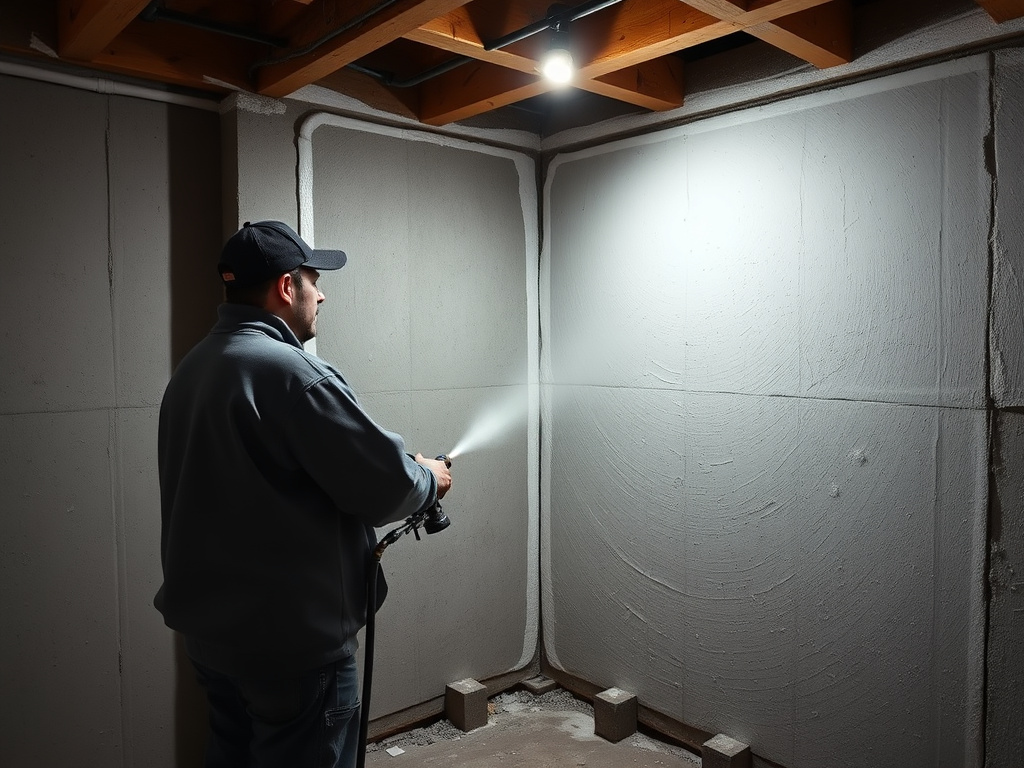
Full, poured-concrete basements are the dominant foundation type across Cleveland and Cuyahoga County — a pattern reinforced by Ohio's clay-heavy soil and frost-line depth, which favors a deep, continuous foundation over a shallow crawl space or slab. Crawl spaces show up in secondary applications and additions; slab-on-grade construction is the least common of the three locally. That means the below-grade envelope isn't a niche concern in this market — it's the norm, and an unconditioned, poorly insulated basement or crawl space sits directly beneath living space in a huge share of Cleveland homes, with January lows averaging 22.3°F pressing against foundation walls and rim joists for months at a time.
IECC Zone 5A is officially classified 'cool-humid,' and that humidity is a real design factor below grade, not just an attic or wall concern — Cuyahoga County's clay soil holds water against basement walls, and a basement that isn't properly insulated and air-sealed is prone to both cold-floor complaints above and condensation or musty-basement issues below. Spray foam solves both problems in the same application: closed-cell foam applied to basement and crawl space walls insulates to the Energy Star Zone 5A guidance of roughly R-15 continuous insulative sheathing or R-19 batt-equivalent performance — often R-20 or better with closed-cell foam once full moisture and thermal performance are factored in — while its closed-cell structure acts as a genuine moisture barrier against ground dampness, something fiberglass batts simply can't do once they get wet.
Why homeowners choose it
- Closed-cell foam air-seals and insulates the basement or crawl space perimeter in one application, closing the gaps where cold air and ground moisture bypass fiberglass batts.
- Reaches Energy Star's Zone 5A basement-wall guidance — roughly R-15-R-19+ equivalent, often R-20+ with closed-cell foam — without the excessive thickness fiberglass would need to approach the same performance.
- An insulated, air-sealed basement keeps water supply lines, drain lines, and shutoff valves further from the near-freezing infiltration that causes winter pipe freezes.
- Closed-cell foam's rigid, moisture-resistant structure holds up against ground dampness that's common in Zone 5A's humid-continental climate and Cuyahoga County's clay soil, unlike fiberglass, which absorbs water and sags out of place.
- Sealing the basement or crawl space perimeter stops cold air from migrating up through subfloor penetrations, reducing the cold-floor complaints common in kitchens and bathrooms above.
- Cutting basement and crawl space heat loss reduces the load on ducts, water heaters, or other mechanicals often routed through that space, trimming heating costs through Cleveland's long, heating-dominated season.
Why Cleveland Basements Freeze and Sweat in the Same Winter
Cleveland's basement-dominant housing stock means most homes have a large, continuous below-grade surface area exposed to both cold infiltration and ground moisture at the same time — a combination that's specific to Zone 5A's cool-humid classification. Sustained cold stretches are routine here, and an unconditioned basement or crawl space built to an older, minimum standard puts water lines, drain traps, and the subfloor itself just inches from near-freezing air pooling against the foundation wall. Without continuous insulation and air-sealing at the perimeter, that cold has a direct path to plumbing and any ductwork routed underneath.
At the same time, Cuyahoga County's clay-heavy soil holds moisture against basement walls more than sandier soils would, which is exactly what Zone 5A's 'humid' designation is describing. Fiberglass batts stapled against a foundation wall don't just fail to insulate well in this environment — they absorb ambient moisture, sag, and can contribute to a musty, damp-basement smell rather than solving it. A basement or crawl space that isn't properly insulated and air-sealed is one of the most common sources of both winter callback problems and year-round moisture complaints in Cleveland homes.
- Frozen or burst water lines during sustained cold snaps
- Persistently cold floors in rooms directly above the basement or crawl space
- Visible frost, condensation, or a musty smell tied to Zone 5A's humid-continental profile
- Heating system running constantly without keeping up
Reaching Energy Star's Zone 5A Basement Wall Target with Closed-Cell Spray Foam
Basements and crawl spaces are the one part of a Cleveland home where moisture exposure is a given, which is why closed-cell spray foam is the standard choice for this application. Energy Star's Zone 5A table calls for basement or crawl space walls insulated to roughly R-15 continuous insulative sheathing or R-19 batt-equivalent — at roughly R-6 to R-7 per inch, closed-cell foam reaches that typical range without eating up limited crawl space clearance, and its rigid, closed-cell structure resists ground dampness rather than absorbing it the way fiberglass does. Many projects land at R-20 or better with closed-cell foam once full moisture and thermal performance are factored into the assembly.
The application covers the basement or crawl space perimeter walls and, just as importantly, the rim joist and sill plate band where the framing meets the foundation — a transition point that's routinely under-insulated and a major source of cold-air infiltration into the living space above. Sealing that band in the same pass as the perimeter walls closes off one continuous cold-and-moisture path instead of leaving it as a separate gap for later. Existing ground vapor barriers in crawl spaces are checked and addressed as part of the same project, since a torn or missing barrier undermines the moisture performance of everything installed above it.
What the Basement & Crawl Space Spray Foam Process Looks Like
Every project starts with an on-site assessment of the space: current insulation condition, moisture and vapor barrier status, clearance, and whether ducts, plumbing, or a water heater are routed through the area. Failed, wet, or deteriorated fiberglass and any torn vapor barrier are removed before foam goes in, since spray foam needs to bond to clean framing and masonry to perform correctly and last.
From there, closed-cell foam is applied to the perimeter walls and rim joist band to the target thickness for a Zone 5A assembly, with attention paid to sealing around plumbing penetrations, framing seams, and the sill plate. Foam cures quickly, and most basement and crawl space projects are completed in a single day depending on size and access.
- On-site assessment of moisture, clearance, and existing insulation condition
- Removal of failed insulation and deteriorated ground vapor barrier
- Closed-cell foam application to perimeter walls, rim joist, and sill plate
- Ventilation and access review to match how the space will be used going forward
Ideal for
- Cleveland-area homes with unconditioned basements or crawl spaces and a history of cold floors or frozen pipes
- Properties showing frost, cold drafts, or condensation on foundation walls and subfloor framing during winter months
- Homes with ductwork, a water heater, or plumbing runs located in the basement or crawl space
- Pre-1940s homes across Tremont, Ohio City, Glenville, and inner-ring suburbs like Lakewood and Cleveland Heights with aging foundation walls or vapor barriers
- New or existing homes looking to improve basement moisture control alongside insulation performance
What affects the cost
Basement & Crawl Space questions, answered
Yes — an unconditioned basement or crawl space is one of the most common places pipes freeze in Cleveland homes during sustained cold snaps. Spray foam insulates and air-seals the perimeter so the space holds temperature well above where fiberglass batts alone can manage.
Poured-concrete full basements are the dominant foundation type here, reinforced by Cuyahoga County's clay-heavy soil, which holds water against foundation walls more than sandier soils would. That's consistent with Zone 5A's official 'cool-humid' classification. Closed-cell spray foam acts as a moisture barrier rather than absorbing water the way fiberglass does, which matters directly in this soil and climate combination.
Closed-cell spray foam's rigid structure resists ground dampness rather than absorbing it, which helps address one common contributor to musty basement odors. A sound ground vapor barrier in a crawl space, addressed as part of the same project, completes the moisture-control picture.
Energy Star's Zone 5A guidance calls for roughly R-15 continuous insulative sheathing or R-19 batt-equivalent performance on basement and crawl space walls — often R-20 or better with closed-cell foam once full moisture and thermal performance are factored in. We size the assembly during a free on-site assessment.
Closed-cell is the standard for this application because of its higher R-value per inch and resistance to ground moisture. We'll confirm the right approach for your specific space during a free on-site assessment.
Basement & Crawl Space done right, by a local Cleveland crew
Basement & Crawl Space isn't a commodity — the result depends entirely on how carefully it's planned and installed for your specific home and Cleveland's real cool-humid, lake-effect climate. We assess what your house actually needs, prep and air-seal properly, and install to your Zone 5A-appropriate R-value target, so the work delivers the comfort and savings it's supposed to.
We serve Cleveland and Cuyahoga County — Lakewood, Cleveland Heights, Shaker Heights, Parma, Euclid, Westlake, Strongsville, North Olmsted. Every job starts with a free, no-pressure quote.
Just as important, we treat your home like the system it is. Insulation, air sealing, and basement moisture control all interact, and getting one right while ignoring the others leaves comfort and savings on the table. When we scope your basement & crawl space, we look at how it fits the whole picture — so the finished result performs the way it should, holds up through a genuine Cleveland winter, and actually lowers the bills you feel every month.
Free assessment
We evaluate your home and give you a clear, itemized quote.
Expert install
We prep, air seal, and install your basement & crawl space to spec — clean and on schedule.
Savings you can feel
A warmer home, lower heating bills, and honest advice about what your home needs.
Related services
Ready for a free basement & crawl space quote?
Tell us about your home and we'll put together a clear, no-pressure spray foam insulation quote — built for Cleveland's lake-effect winters.